



Four Types of Data Analytics to Improve Decision-Making

Due to the sheer amount of data now accessible to companies, it is easier than ever to leverage information accumulated in order to push real business value. Nevertheless, it can be tricky to find the best way to examine the data.

Hence, why you need to understand the types of data analytics

 There are four different types of data analytics.

Descriptive analytics

Descriptive analytics helps to better comprehend the changes that have ensued in a business. It organizes raw data from several data sources to give significant insights into the past. With a scope of data, decision-makers get a full view of performance and trends from which they can base their business strategy off of.

The statistical technique used within this type of analysis usually focuses on the patterns in data which help to filter out less meaningful data. Descriptive analytics provides significant information in an easy-to-understand structure.

Diagnostic analytics
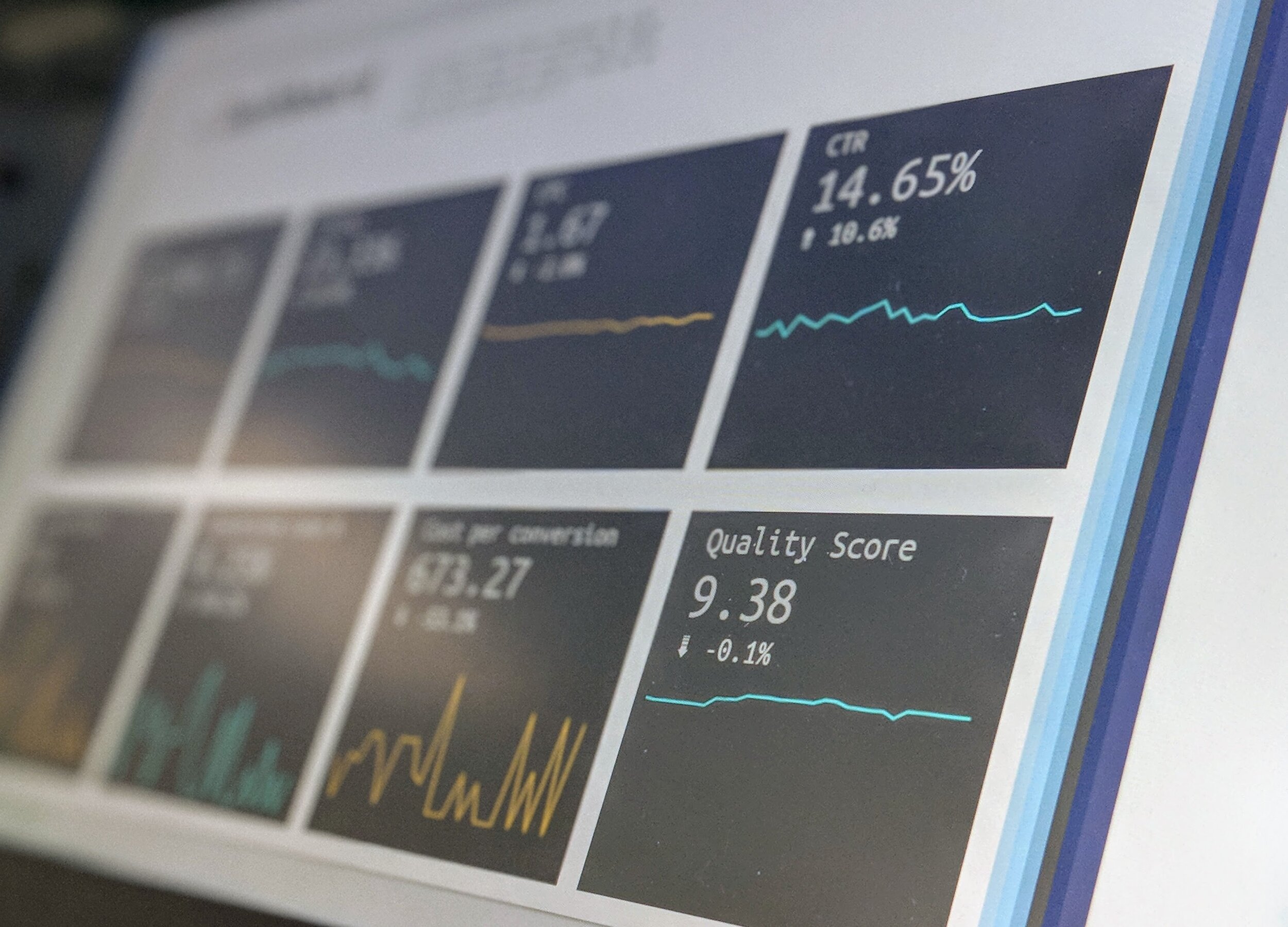
Diagnostic analytics measures data against other data to answer the question of why something happened. This occurs by taking a deeper look at data in a bid to grasp the causes of events and behaviours. It lets you understand your data faster to solve vital questions. Diagnostic analytics reveal the rationale behind specific results.

With this type of analytics, you get in-depth insights into a specific problem by interpreting your complicated data into visualizations and insights that everyone can understand. And you should have detailed information at your disposal, else, data collection may turn out to be time-consuming.

Predictive analytics

Predictive analytics predicts future trends. Using the findings of descriptive and diagnostic analytics, predictive analytics can detect clusters and exceptions, and identify risks and opportunities for the future. It is a valuable tool for forecasting.

Predictive analytics permit organizations to become proactive, forward-looking, foresee outcomes and behaviours based upon the data and not on assumptions. Keep in mind that the accuracy of the results highly depends on data quality and stability of the situation since forecasting is just an estimate.

Prescriptive analytics

The objective of prescriptive analytics is to assist your business in identifying data-driven strategic decisions and eliminate a future problem. Prescriptive analytics uses data to comprehensively understand and predict what could happen, then advises the best steps forward based on informed models.

Advanced tools and technologies, like machine learning, business rules, and algorithms are utilized to stimulate various approaches to numerous outcomes. Prescriptive analytics also helps to reduce errors because it involves data aggregation, both internal data and external information.

So what’s next?

Now that you understand the different types of data analytics, let’s talk about how to identify the one(s) your business needs. First, you need to provide answers to the following questions:

  • Firstly, what is the present state of data analytics in your business?

  • Secondly, what is the depth of the data needed?

  • Thirdly, how far are your present data insights from the insights you need?

  • Finally, are there obvious answers to the issue?

The answers will guide you on the next steps and strategy. You will be able to work with the best data analytics option with the most favorable technology stack, and then commence and execute it effectively. Keep in mind that the more complex an analysis is, the more value it brings.

The goal of any analytics program should be more relevant information, which will lead to more valuable decisions and a more complete understanding of your business landscape. Additionally, if you want to read about our Custom Software Solutions and Consulting Services, Get In Touch and we will get back to you shortly.




Today’s Most Important Technology Trends

We are amidst the 4th Industrial revolution and technology is rapidly growing. A life without phones, computers, basic kitchen utensils, a vehicle? It’s hard to imagine, isn’t it?

From the earliest use of simple resources like paper money, to today’s cutting-edge technological advancements like blockchain or cryptocurrencies, the fast expansion is distinct, and we all are in for the ride. 

So, let’s dive into the most imminent trends.


Artificial Intelligence (AI)

Artificial intelligence is probably the most imperative and leading trend in technology today. It has created a lot of buzz because of its effects on how we live, work, and play. It is truly breathtaking how we have managed to create machines and systems that can think for themselves.

AI is one of the most transformative technological evolutions of our times. The Apple iPhone’s Siri or Amazon’s Alexa are perfect examples of how it is already being used by most of us out here. The onset of smart homes, smart cities, and the Internet is imminent, which means that AI will be integrated more and more into our everyday lives. And it is very likely that we will see wider adoption and a growing pool of providers that are likely to start offering more tailored applications and services for specialized tasks. 

What does this mean for your company? It’s time to take a step in the right direction! It is so exciting to see science fiction being made into reality, and it’s happening right before our very eyes.


Online Streaming

When’s the last time you saw a movie in theaters? How about the last time you watched a movie or show on Netflix? If you’re like most consumers, you’ve done the latter thing more often. 

Netflix has stimulated the trend of online streaming that has taken a big toll on how we entertain ourselves. We don’t have to rent VHS tapes, DVDs or watch whatever is on live TV anymore. Most people’s preferred entertainment platforms are Netflix, Amazon Prime, and other online streaming services. This means traditional TV could soon become obsolete if the popularity of online streaming continues. 


Virtual Reality (VR)

Virtual reality has set a completely different and exciting course for technological uprising which is setting a bar for entertainment and learning at the next level. Although VR has primarily been used for gaming thus far, it has also been used for training, as with VirtualShip, a simulation software used to train U.S. Navy, Army, and Coast Guard ship captains.

You can see its presence in the entertainment industry and it’s gradually hopping on the bandwagon of other platforms. It is also a great way to train and educate, especially when it comes to hands on training; VR is a great way to try a new exciting activity without the risks that come with it. 


Augmented Reality (AR)

Virtual Reality (VR) immerses the user in an environment, while on the other hand, Augmented Reality (AR) enhances their environment. AR is an interactive experience of a real-world environment where the objects that reside in the real world are enhanced by computer-generated perceptual information.

Pokemon Go for example, is one of the greatest productions within the AR world. Both VR and AR have enormous potential in training, entertainment, education, marketing, and even rehabilitation post-injury. It is very likely that in the future, interaction between environments and reality will be greatly defined by technologies based out of AR and VR technologies.

On-demand Apps

Uber. Skip the dishes. UberEats. DoorDash. I could go on and on with examples of on-demand apps that we tend to use on a daily basis. One tap on your smartphone and you can find food on your doorstep in 15 mins.

Isn’t that so cool? Today, people are getting more and more used to having everything on-demand. And this is a rapidly growing trend, which will shape our day-to-day lives in a very dramatic way. 


Custom Software Development

You are living in a world full of products and services, and you can easily find yourself lost in all these technological advancements. But don’t worry, we’re here to provide you with the best advice for your business. Custom software development is your solution, since not only can it give you an edge over your competitors, but also increase revenue and be cost-effective.

These technology trends are the future. If companies don’t evolve according to these trends, there is a very strong possibility they might end up like Blockbuster. If you don’t know what I am talking about, Blockbuster LLC was a provider of home movie and video game rental services. But it went bankrupt because they didn’t advance and compete with new technology.

If you don’t want to be the next Blockbuster, contact our experts today. And we will be happy to help your company grow with the latest technologies.


Seven Big Data Challenges and Ways To Solve Them

Before going big data, every leader or decision-maker needs to be aware of what they are dealing with. And in the process of making these decisions, you will face certain challenges.

Now, if the company hasn’t done full fledged analysis and strategized accordingly, these challenges can be harder to overcome. Here, I am going to cover 7 major big data challenges that people face and provide you with solutions for each one of them. 

Challenge #1: Insufficient understanding and acceptance of big data 

A lot of companies tend to waste not only their precious time, but also their resources on things they don’t even know how to use.

And I strongly believe that without a decent understanding of big data’s value and resistance to change in existing processes, the company’s progress will be hindered.

Solution:

Big data is a major transformation for a company. And it is extremely important for it to be accepted by top-level executives first and then towards the lowest end of the scale. Thus, IT departments need to organize numerous training sessions and workshops in order to establish a better understanding and acceptance at all levels.

In addition to that, the application and use of big data solutions needs to be supervised and composed. 

Challenge #2: Confusing variety of big data technologies

Now, there is an abundance of big data technologies available to you which can create a lot of confusion. It is very easy to find yourself lost in this plentiful amount of technologies available on the market. And it's worse when you’re unsure of what you need when searching for the next technological opportunity.

Solution:

If you are someone who has no clue on where to begin when it comes to big data, then professional guidance will prove to be very helpful. There are many resources out there; you could consult an expert or turn to a vendor for big data consulting. In both scenarios, you will be successful in finding the right strategy and technology stack that will align with it. 

Challenge #3: Paying loads of money

Money, Money and more Money. Big data projects necessitate lots of expenses. Whether it be an on-premises solution or cloud-based big data solution, the first expense is the need to hire new staff (administrators and developers) who will actually make your strategy work.

On top of that, on-premises solutions, even though they have open-source frameworks, require development, setup, configuration and maintenance expenses. When it comes to cloud services, there are other expenses such as, big data solution development, setup and maintenance on needed frameworks. 

However, in both the scenarios, if you are looking to save money, you need to be flexible towards future expansions. 

Solution:

The preservation of your company’s penny will depend on its specific technological needs, strategy in use and business goals. For instance, there are companies that use the cloud for flexibility benefits. Whereas other companies might want on-premises because of extremely strict security requirements.

In addition to that, you can also find hybrid solutions where some parts of data are stored and processed in the cloud and other on-premises. And this strategy in particular can be very cost-effective. Moreover, using data lakes or algorithm optimizations (only and only if done properly) can also save money:

  1. Data lakes can help you save money by storing data that is not needed to be analyzed at the moment.

  2. Optimized algorithms can reduce computing power consumption by 5 to 100 times.

To sum it all, in order to save money, you need to analyze your needs and choose a corresponding course of action.

Challenge #4: Complexity of managing data quality

Data from diverse sources

Data integration is a major challenge that companies face sooner or later. This is mainly because data used for analysis is derived from various sources. And this data can be in a variety of different formats.

For instance, eCommerce companies need to analyze data from website logs, call-centers, competitors’ websites ‘scans’ and social media.

Unreliable data

Like any other technology, even big data isn’t 100% accurate and no one is hiding it. As a matter of fact, it’s not that critical. But don’t get me wrong, you should definitely control how reliable your data is. Because it can always contain wrong and contradictory information. In addition to that, data can always duplicate itself. Thus, you need to always keep an eye out. 

Solution:

There are a bulk of techniques in the market solely for cleansing data. But first of all, your big data needs to have a proper model and the right strategy. Only then, you can go ahead and do other things, like:

  • Correlate data with a single point of truth.

  • If data relates to a certain entity, just match and incorporate it.

Challenge #5: Dangerous big data security holes

The most naive move that big data adoption projects make is putting security off till later stages. Time and time again, big data security gets overlooked. The tech evolves, but security is not a factor taken into consideration until the application level. 

Solution:

As the saying goes, precaution is better than cure. It is important to put security first. And this is the precaution against your possible big data security challenges. It is particularly important at the stage of designing your solution’s architecture. 

Challenge #6: Tricky process of converting big data into valuable insights

Has this ever happened to you that you saw an advertisement and you were like, “Damn! It looks so good, I want to buy it.”. Then you go to the store but it’s not available.

Now, you’re disappointed and you decide I am never going to buy anything from here. And as a result of your disappointment, the company lost revenue and a loyal customer.

Solution:

Now, you might be wondering where the problem is. The analysis done by a company's big data tool does not take into consideration the data from social media platforms or competitors’ websites. Whereas, the competitor might be keeping an out in near – real – time.

To solve this problem, the firm needs an ideal system, which, on analysis, brings useful insights and makes sure no meaningful information/data is slipped out. And this system must include external sources. 

Challenge #7: Troubles of upscaling

One of the most serious challenges in the field of big data is associated with its dramatic potential to grow. 

The major problem with upscaling is not the process. Even though your design might be adjusted in a manner that requires no extra effort, it won’t guarantee the same/better performance. There is a chance that it may even decline. 

Solution:

To the greatest extent, precaution for challenges like this is a decent architecture of your big data solution. One of the most important things you need to remember while designing your big data algorithms is future upscaling. 

But apart from that, there is a dire need to figure out maintenance and support of the system in advance, so that any changes can be taken care of in a timely fashion. And on top of that, holding systematic performance audits can help you identify weak spots and address them in a timely manner.

Win or Lose?

It is pretty evident, most of the reviewed challenges can be foreseen and dealt with if your big data solution has a decent, well-organized and thought-through architecture. And this requires companies to commence a methodical approach to it. 

But besides that, companies should:

  • Hold workshops for employees to ensure big data adoption.

  • Carefully select a technology stack.

  • Mind costs and plan for future upscaling.

  • Remember that data isn’t 100% accurate, but still manages its quality.

  • Dig deep and wide for actionable insights.

  • Never neglect big data security.

If your company follows these tips religiously, it has a reasonable chance of defeating the Scary Seven. And for expert advice on various challenges, feel free to contact our experts. Good luck on your journey exploring Big Data!