
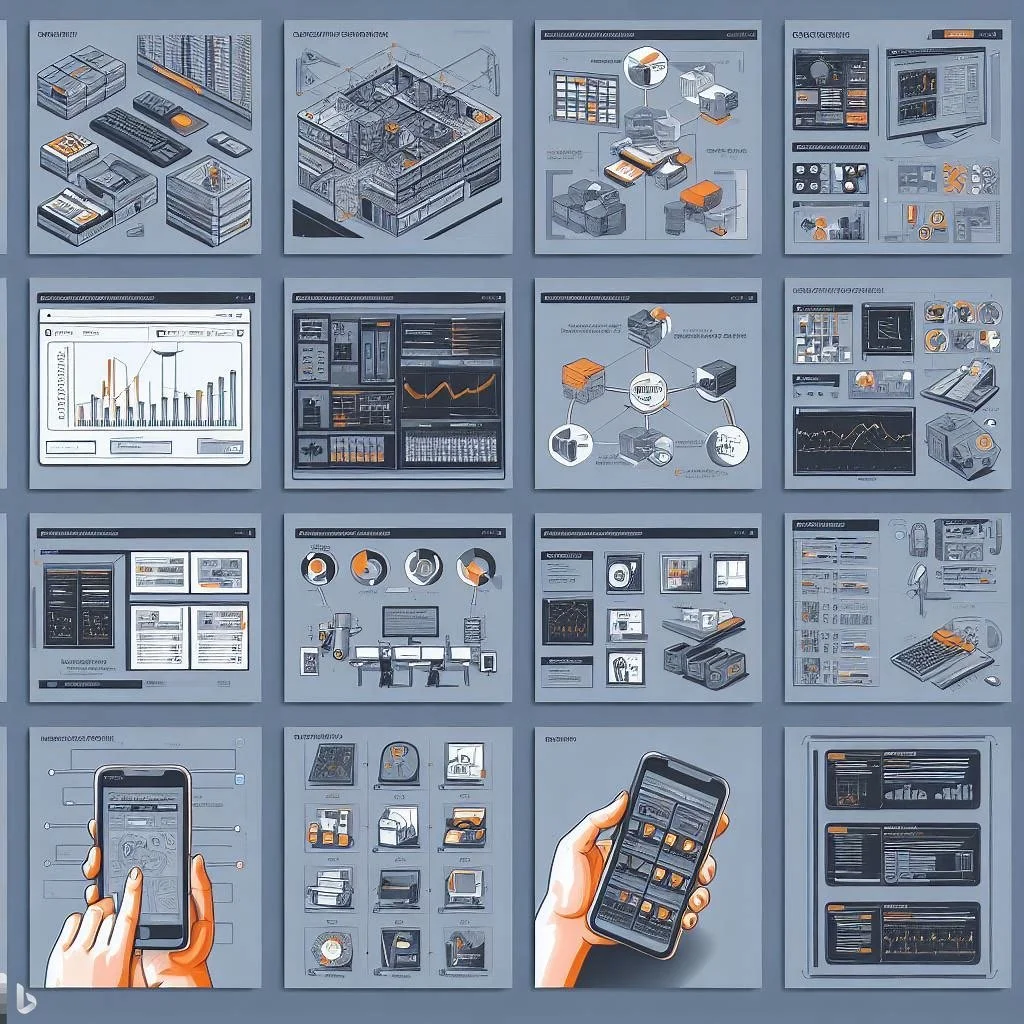



Low-Code Development Platform

Why Choose a Low-Code Platform?

Low-code development platforms (LCDPs) are a model-driven development software that provides the Graphical User Interface for programming. These platforms help to reduce time-consuming hand-coding, as well as quick setup and deployment. Low-code development platforms can be fully customized with a minimal amount of programming.

The shortage of professional developers and rising demand for software solutions has launched the adoption of low-code development platforms to the vanguard. Low-code platforms are simple to configure and deploy. At ISU Corp, we make sure that your software solution is documented, properly deployed, and secured.

So, Why Should You Consider a Low-Code Application Development?

It’s simple, low-code application development is the way of the future. Apart from the obvious reason, faster and simpler innovations and developments, here are a few reasons why you should jump on the low-code trend.

  1. Improves productivity:

    Allowing business teams to create their applications, without waiting for developers saves a lot of time for both parties. Low-code application development allows IT and business teams to solve real issues that impact the company.

    Eliminating complex code allows more team members to participate in the development process. New ideas will be reiterated and launched faster, which will enhance productivity.

  2. Reduce cost, lower barrier to entry, and deployment time:

    With low-code application development, you no longer need expert coders for full development. You can make use of experts in a field with some coding knowledge instead.

    This will reduce cost and time to deployment. Low-code development platforms lower the barrier to entry by allowing non-technical audiences to assemble solutions. 

  3. Improves development speed:

    Low-code development platforms are great at shortening deployment time. It doesn’t take much time to hand-code.

    For professional developers, the low-code application development is easier, and there are very few bugs to fix. And for beginners, you just need to drag and drop the modules you need and create the application.

  4. Improves agility:

    In the long run, applications developed with low-code platforms help businesses become more agile. Businesses can respond to market changes and new opportunities using innovative solutions.

    Low-code allows you to better meet the changing needs of your customers by offering cloud applications that integrate well with legacy systems. Additionally, you can integrate different kinds of components into your applications.


Although the interfaces are uncomplicated, low-code platforms aren't as easy as it may seem and there are limits to their flexibility. While some business requirements can accommodate low-code application development, custom software solutions are a better option for others. You have to carefully analyze both options and choose the best fit for your business.


A low-code development platform is more user-friendly, but if you’re unsure on next steps, let us help. Contact us today for more information.




7 Web Technologies to Build a Web Application

ISU Corp is well known for its software services, specifically the specialization of advanced web applications. No matter the depth and requirements of the project, we’re here to help ease your workload! We have lots of expertise amongst a diverse range of technologies that are used to develop web applications.

We’re going to be discussing 7 different web technologies to create a framework for your application. 

Information, Information, Information! 

When formatting a web application, technologies from both the client and server side are necessary. What do we mean by web technologies? 

The client side technology is the building and display of information that your users will be interacting with, or rather, your clientele. Meaning, it should be user-friendly, properly formatted, and engaging. 

When setting up a web app, there are varying languages that can be used to do so (which we will be looking at in a bit). The primary web language is JavaScript, which means that most web technologies will be using this language. However, the server technologies differ depending on what works best for you. 

  1. jQuery JavaScript Library

This is the most common JavaScript based technology. It is fairly easy to comprehend and continually enhances on AJAX interfaces, which ultimately eliminates the varying factors between traditional and online applications. jQuery is great for both basic websites and complex applications. 

This library allows developers new and advanced opportunities to create highly interactive platforms and abilities to incorporate animated features. 


What are some of these great opportunities you may ask?

  • Plug-ins that can be useful for customization 

  • Efficient and concise 5 lines of jQuery code is equivalent to 25 lines of traditional code

  • Simpler than AJAX processes 

  • Website that has a plethora of technical tools (e.g. documentation)

  • Illustrations and examples for developers 

2. Yahoo! User Interface Library (YUI) 

This technology allows developers to create very interactive apps within various Internet browsers. It combines JavaScript controls with tools from AJAX, DHTML, and DOM scripts. 

Main advantages:

  • BSD licence which allows controls to be used for business 

  • FREE! 

  • Constantly updated which adds to the massive amounts of page views per day 

  • Online forums for helpful documentations 

YUI is a flexible library with only 11 KB that includes a place for events, language utilities, and DOM normalizations. If 11 KB is not enough, you’re able to upgrade to the 17.4 KB option that comes with features like the YUI Loaders; used for CSS and JavaScript to load any requirements for your YUI module. 

YUI is simple which is perfect for developing the client-side of technological apps. Each aspect of this library is adaptable, such as the tools for making widgets, customizing events, and managing your platform. 

One of the greatest features is that it has built-in modules to choose aspects from for any page you’re creating. This is especially useful when working on a more complex project. Also, the BSD licence feature integrates all of the widgets and tools which meet the required licensing terms. YUI is accessible to almost everyone, with great consideration to the developers who are continually increasing user experiences. 

The creators of YUI have added in educational documentations like cheat sheets, guides and explanations to allow you to have complete peace of mind while creating your app. 

3. Sencha Ext JS 

This is a cross-browser library within JavaScript used to create web apps. Similar to YUI, it is not dependent on a particular Internet browser. 

Main features:

  • Toolbars

  • Combination boxes

  • Message boxes

  • Data grids 

  • Manager control for layout 

This library has the capability to provide an extended, object-oriented structure for a nice aesthetic. The user interface within this technology can also be complemented with Ruby and most other server-side technologies. 

4. Flex

If you’re needing to develop an application that can work on any operating system or browsers, then Flex technology is perfect for you. This framework allows you to have highly advanced interactivity and designs that ultimately improve user experience. Flex apps are deployed through various Flex applications via Flash Player or Adobe Air. 

ISU Corp takes client knowledge, expertise, and creativity to create an amazing application through Flex to meet business needs. Along with the fact that Flash tools are one of the most developed technologies within the web app landscape. 

Flex services include:

  • Integration with JavaScript

  • Integration with .NET

  • Integration with PHP

  • Custom application development 

5. Telerik RadControls and Telerik’s ASP.NET MVC Extensions 

These tools allow our developers to create valuable and user-friendly interfaces quickly and efficiently. The main thing everyone wants when creating an online platform is for it to be engaging, rich with content, and create great experiences for the users - allowing them full functionality. 

Telerik RadControls allows for the client-side API to be similar in nature to the server-side. The opportunities are many with the combination of data binding, JSON calls, and WebServices! 

If you’re looking at creating desktop applications, this technology is useful as it helps you create highly visual and extraordinary functions for your business. There are over 45 user-interface controls with RadControls, which means we can help your company form a complete custom application! 

6. Twitter Bootstrap 

Made by Twitter, this is a light-weight framework designed for front-end development. With the use of CSS and JavaScript, developers are able to create simple and easily updated web pages.

Biggest Strengths: 

  • Standardizes styles 

  • Grid system which supports varying screen sizes allowing access across different devices

Bootstrap is particularly beneficial for small and mid-sized web applications where core functionality is of the highest priority. 

7. AngularJS  


This is one of the newer JavaScript frameworks, but is continually growing and advancing within the market. AngularJS is supported by Google which makes it easy to create great web applications. 


Angular combines components, patterns, and different development practices into one place, which makes it highly accessible and usable for all. With its high adoption and increasing popularity rate, it is always a safe option to go with. 


Which technology is the right one for your business? 

There are so many factors that go into deciding which technology to use to create your web application. Which one is the fastest? Most reliable? Best features? 

We’ve only brushed the surface of many of these questions, to learn more, contact us today. 


Web Applications VS Websites

Web applications is a new Internet term that you may have heard of, but are unsure of what it means. What's the difference between websites and web applications? Do I need both for my business? Which one is best for my company?

Today we will differentiate between these two key terms and which will be best for you. 

What are Websites?

Websites are a great way if you want a space to display information and media. They are better for lower level functionality jobs and are a lot easier to build compared to web apps.

Integrating contact management systems (CMS) is always recommended for websites as it allows you to easily update and change information and data on the website. CMS integration for websites is much more simple than for web apps. 


What are Web Apps?

Unlike websites, which are a set of related web pages from a single domain, a web app is computer software that is accessed through a web browser. They are extremely customizable and are very functional, which makes them much more difficult and complex to build and typically requires a team of software developers.

For CMS integration, you might need to build a custom CMS or not integrate with CMS in the first place. This is all determined by what you need your web app to do and the functionalities it’ll possess. Examples of web applications include Microsoft 365 and Google apps. These applications can do complex jobs and are typically accessed through the Internet. 


Interested?

Typically websites are enough for simple businesses. Companies who build web applications tend to be tech companies who want to expand their product line, rather than more simple commerce companies. 

At ISU Corp we can assist in helping you build anything from a simple website all the way to a complex web application. Reach out to learn more about how we can help your business.