


Business

Why Business and Functional Requirements are Crucial for your Organization

A crucial aspect of the success of any project is getting the requirements right in a product development process. The eventual success or failure of any project hangs on the attribute of the requirements. Consequently, understanding the requirements and using them to the fullest extent is vital for a project’s success.

In this blog, we will explore the differences between Business Requirements and Functional Requirements. Taking care of the issue is a top priority, which is why it is necessary to comprehend the differences between the two. 

Business Requirements

Understanding the ‘why’ part of a project is an essential component of delivering a perfect experience to your clients. Focusing on why also means you are emphasizing the business requirements.

A business requirements document aims to communicate a complete picture of a project, so everyone is clear on what must be done and when. These documents explain what a system and a solution ought to do. They describe the degree to which a project should address business needs.

Business Requirements Document (BRD)
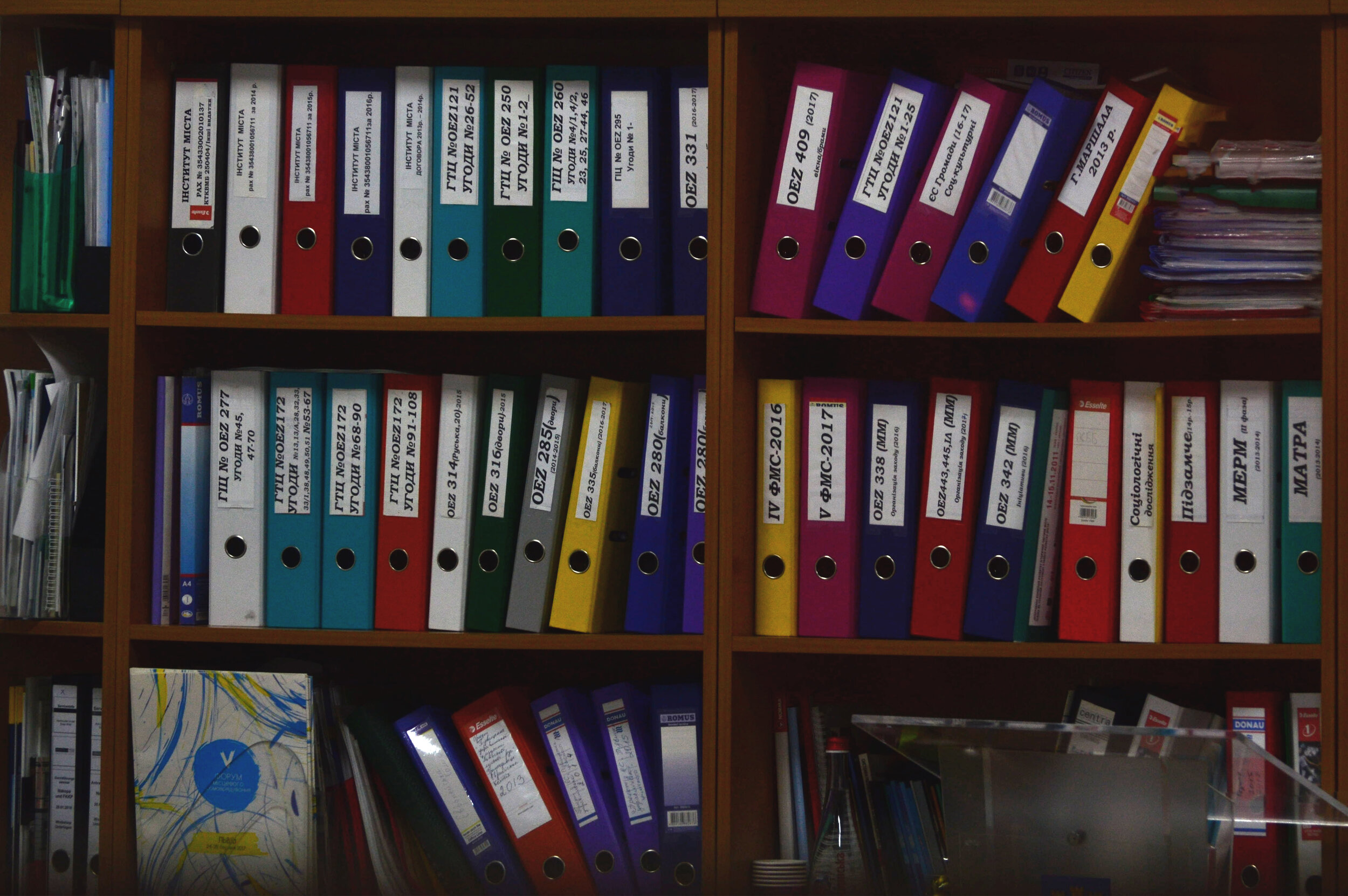
The business requirements are recorded in the Business Requirements Document. A BRD communicates essential business needs. The customers and the users are the primary target audience of a BRD. With a brilliant business requirement document, the anticipated goal of creating an effective product within the specified time limit can be achieved.

It includes the following components:

  • The vision of the project

  • Objectives of the project

  • Background of the project

  • Scope of the project

  • Stakeholder identification

  • Detailed business requirements

  • Scope of the solution

  • Project constraints: available resources, time frame, and cost

Guidelines for writing a business requirements document (BRD)

Now that we have discussed what a BRD should achieve, these are tips to guide you to write an excellent business requirements document.

  • Do due diligence on past projects

  • Authenticate the documents

  • Apply strong requirements elicitations 

  • Make use of simple language without jargon and passive tones

  • Incorporate visuals


Functional Requirements

As the name implies, Functional Requirements are a narrative of the service that the software offers, which is a description of the functionalities of the software. A function comprises inputs to the software system, its behaviour, and outputs.

It can be data manipulation, user interaction, calculation, business process, or any other functionality that illustrates what a framework should accomplish. Functional requirements must not be ambiguous and should align with the project needs.

Functional Requirements Document (FRD)

The Functional Requirements Document summarizes the functions required to achieve the project needs. It involves the client’s consent to find a product acceptable if it delivers the competencies indicated in the FRD. As such, the developers agree to offer the capabilities stated.

FRD includes the following elements:

  • The objective of the project

  • Scope of the project

  • Comprehensive functional requirements

  • Expectations and constraints

  • Illustration of the functional requirements using information architecture. 


Tips for writing a functional requirements document (FRD)

Creating a functional requirements document is just like writing a memo to all the team members, informing them about the technical tasks you would want them to execute.

The following tips would help you write a useful FRD:

  • Verify your facts

  • Use clean language

  • Incorporate diagrams and illustrations 

  • Observe time frames


Challenges in writing good business and functional requirements

Writing good and valid business and functional requirements can be difficult. Common challenges that are faced while writing these requirement documents include:

  • Using vague acronyms

  • Using the wrong sentence structure

  • Writing about execution rather than requirements

  • An incomplete understanding of the requirement and not asking for clarification

  • Incorrect interpretation of the requirement and using personal filters to the data that alters the objective

  • Execution decisions should be delayed in the Requirements Elicitation process


Solidify Your Business

Now that we have broadly discussed that requirements are the foundation of every business, will you reconsider how your business does business?

Both business and functional requirements form the groundwork of practical business analysis. The “why” of a project is taken out of the business requirements, and the functional requirements elucidate the “how” of the project.

Get in touch with us to discuss custom software solutions and cloud services for your business.


Four Types of Data Analytics to Improve Decision-Making

Due to the sheer amount of data now accessible to companies, it is easier than ever to leverage information accumulated in order to push real business value. Nevertheless, it can be tricky to find the best way to examine the data.

Hence, why you need to understand the types of data analytics

 There are four different types of data analytics.

Descriptive analytics

Descriptive analytics helps to better comprehend the changes that have ensued in a business. It organizes raw data from several data sources to give significant insights into the past. With a scope of data, decision-makers get a full view of performance and trends from which they can base their business strategy off of.

The statistical technique used within this type of analysis usually focuses on the patterns in data which help to filter out less meaningful data. Descriptive analytics provides significant information in an easy-to-understand structure.

Diagnostic analytics

Diagnostic analytics measures data against other data to answer the question of why something happened. This occurs by taking a deeper look at data in a bid to grasp the causes of events and behaviours. It lets you understand your data faster to solve vital questions. Diagnostic analytics reveal the rationale behind specific results.

With this type of analytics, you get in-depth insights into a specific problem by interpreting your complicated data into visualizations and insights that everyone can understand. And you should have detailed information at your disposal, else, data collection may turn out to be time-consuming.

Predictive analytics

Predictive analytics predicts future trends. Using the findings of descriptive and diagnostic analytics, predictive analytics can detect clusters and exceptions, and identify risks and opportunities for the future. It is a valuable tool for forecasting.

Predictive analytics permit organizations to become proactive, forward-looking, foresee outcomes and behaviours based upon the data and not on assumptions. Keep in mind that the accuracy of the results highly depends on data quality and stability of the situation since forecasting is just an estimate.

Prescriptive analytics

The objective of prescriptive analytics is to assist your business in identifying data-driven strategic decisions and eliminate a future problem. Prescriptive analytics uses data to comprehensively understand and predict what could happen, then advises the best steps forward based on informed models.

Advanced tools and technologies, like machine learning, business rules, and algorithms are utilized to stimulate various approaches to numerous outcomes. Prescriptive analytics also helps to reduce errors because it involves data aggregation, both internal data and external information.

So what’s next?

Now that you understand the different types of data analytics, let’s talk about how to identify the one(s) your business needs. First, you need to provide answers to the following questions:

  • Firstly, what is the present state of data analytics in your business?

  • Secondly, what is the depth of the data needed?

  • Thirdly, how far are your present data insights from the insights you need?

  • Finally, are there obvious answers to the issue?

The answers will guide you on the next steps and strategy. You will be able to work with the best data analytics option with the most favorable technology stack, and then commence and execute it effectively. Keep in mind that the more complex an analysis is, the more value it brings.

The goal of any analytics program should be more relevant information, which will lead to more valuable decisions and a more complete understanding of your business landscape. Additionally, if you want to read about our Custom Software Solutions and Consulting Services, Get In Touch and we will get back to you shortly.


Today’s Most Important Technology Trends

We are amidst the 4th Industrial revolution and technology is rapidly growing. A life without phones, computers, basic kitchen utensils, a vehicle? It’s hard to imagine, isn’t it?

From the earliest use of simple resources like paper money, to today’s cutting-edge technological advancements like blockchain or cryptocurrencies, the fast expansion is distinct, and we all are in for the ride. 

So, let’s dive into the most imminent trends.


Artificial Intelligence (AI)

Artificial intelligence is probably the most imperative and leading trend in technology today. It has created a lot of buzz because of its effects on how we live, work, and play. It is truly breathtaking how we have managed to create machines and systems that can think for themselves.

AI is one of the most transformative technological evolutions of our times. The Apple iPhone’s Siri or Amazon’s Alexa are perfect examples of how it is already being used by most of us out here. The onset of smart homes, smart cities, and the Internet is imminent, which means that AI will be integrated more and more into our everyday lives. And it is very likely that we will see wider adoption and a growing pool of providers that are likely to start offering more tailored applications and services for specialized tasks. 

What does this mean for your company? It’s time to take a step in the right direction! It is so exciting to see science fiction being made into reality, and it’s happening right before our very eyes.


Online Streaming

When’s the last time you saw a movie in theaters? How about the last time you watched a movie or show on Netflix? If you’re like most consumers, you’ve done the latter thing more often. 

Netflix has stimulated the trend of online streaming that has taken a big toll on how we entertain ourselves. We don’t have to rent VHS tapes, DVDs or watch whatever is on live TV anymore. Most people’s preferred entertainment platforms are Netflix, Amazon Prime, and other online streaming services. This means traditional TV could soon become obsolete if the popularity of online streaming continues. 


Virtual Reality (VR)

Virtual reality has set a completely different and exciting course for technological uprising which is setting a bar for entertainment and learning at the next level. Although VR has primarily been used for gaming thus far, it has also been used for training, as with VirtualShip, a simulation software used to train U.S. Navy, Army, and Coast Guard ship captains.

You can see its presence in the entertainment industry and it’s gradually hopping on the bandwagon of other platforms. It is also a great way to train and educate, especially when it comes to hands on training; VR is a great way to try a new exciting activity without the risks that come with it. 


Augmented Reality (AR)

Virtual Reality (VR) immerses the user in an environment, while on the other hand, Augmented Reality (AR) enhances their environment. AR is an interactive experience of a real-world environment where the objects that reside in the real world are enhanced by computer-generated perceptual information.

Pokemon Go for example, is one of the greatest productions within the AR world. Both VR and AR have enormous potential in training, entertainment, education, marketing, and even rehabilitation post-injury. It is very likely that in the future, interaction between environments and reality will be greatly defined by technologies based out of AR and VR technologies.

On-demand Apps

Uber. Skip the dishes. UberEats. DoorDash. I could go on and on with examples of on-demand apps that we tend to use on a daily basis. One tap on your smartphone and you can find food on your doorstep in 15 mins.

Isn’t that so cool? Today, people are getting more and more used to having everything on-demand. And this is a rapidly growing trend, which will shape our day-to-day lives in a very dramatic way. 


Custom Software Development

You are living in a world full of products and services, and you can easily find yourself lost in all these technological advancements. But don’t worry, we’re here to provide you with the best advice for your business. Custom software development is your solution, since not only can it give you an edge over your competitors, but also increase revenue and be cost-effective.

These technology trends are the future. If companies don’t evolve according to these trends, there is a very strong possibility they might end up like Blockbuster. If you don’t know what I am talking about, Blockbuster LLC was a provider of home movie and video game rental services. But it went bankrupt because they didn’t advance and compete with new technology.

If you don’t want to be the next Blockbuster, contact our experts today. And we will be happy to help your company grow with the latest technologies.