



Data Visualization vs. Data Analytics

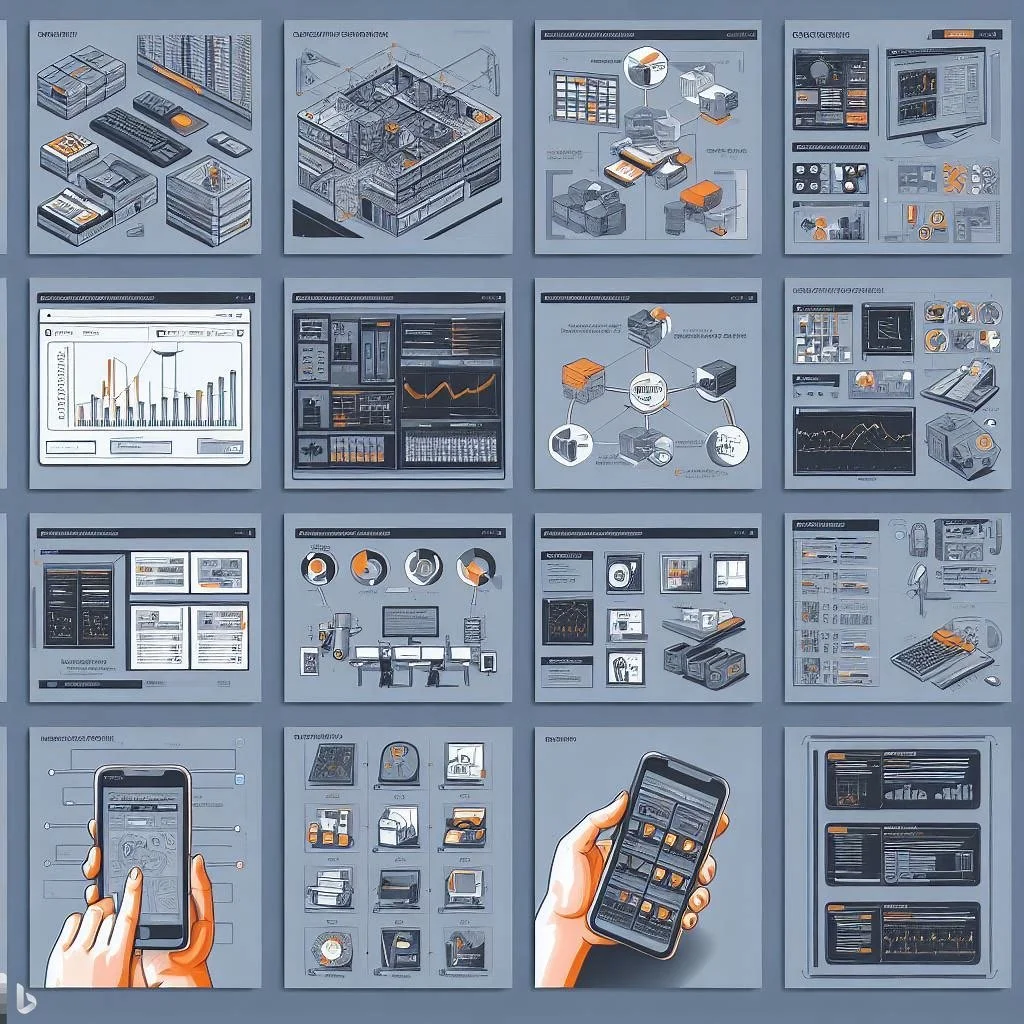
As data is becoming more of the central focus point for competitive advantage, many enterprises are seeking new ways to identify and analyze the data being generated. These enterprises use pie-charts, intuitive graphs, and various forms of visualizations to form a deeper analysis for their sales, revenue and other factors of company operations. 

Although, a balanced approach with both data analytics and data visualization is necessary when formulating an effective data strategy. The reason being, the use of the data visualizations listed above, completely depends on how effective the data is or how the data is used to form conclusive decisions. 


If you thought data visualization and analytics was one in the same- don’t worry, that’s a common mistake many enterprises make. The confusion stems from both aspects allowing users to understand the data and acquire the metrics, which assist in decision making. 

As each year passes, more and more data is generated; causing information overload. The data being generated multiplies EVERY 3 years! So, you can understand why it is crucial to have the necessary resources to interpret all of that information.


On the other hand, this information overload isn’t so bad…

There’s quite a few projections showing an almost certain exponential growth in revenue for big data within the software market. 

Are you still unclear on the difference between data visualization and data analytics? 

Don’t worry, this confusion is common as we mentioned because both forms represent data in visual interfaces. 

However, regardless of the similarities between the two, data analytics dives in deeper with data comprehension than data visualization. The pretty picture at the end is significant, but is definitely not the backbone - the tools and algorithms used to produce the final product is just as important (if not more)! 

Confusion No More: Difference Between Data Visualization and Data Analytics 

Let’s start with data visualization: 

This is the representation of the data in visual form - making the trends and patterns essential in the data the central factor. If you’re using text-based data, such visualizations may not be possible or explicit to the data. As the traditional forms of visualizations are falling off the grid, such as line graphs, charts, and so on, 3D visualizations are taking their place. With 3D visualizations, users are able to manipulate the data with tools available through the application of filters. 

Now let’s dive further into the world of big data. What does data analytics look like? 

This aspect identifies and discovers new trends and patterns throughout the data. Although data visualizations allows users to understand the data, it doesn’t show everything. Visual representations can only be effective if the data being used to create the visualization is effective. So, what does that really mean?

If you’re inputting incomplete data into your visualization machine, then you can only expect a half complete representation of your data. What makes this EVEN more complex is the fact that enterprises are receiving data from multiple sources and storing this data into varying archives. This makes it more difficult to gather comprehensive data for data visualizations. 

Visualization tools handle the fresh, raw, unformatted data, while analytics tools use data mining algorithms to properly clean and evaluate the data by using different evaluations and software resources. With the completion of this, you’re able to subject the data to algorithms and proceed with your decision on how to display your results. 

First Step: Data Integration 

In order to produce an effective analysis, it is required that you consolidate all the data into one space. There are of course analytical engines that collect data from multiple sources, however, by consolidating the data into one space; it provides you with one single version of “the truth”. This prevents the risk of duplication and contradicting information from distorting the visualizations. 

With the continuous increase in data production, manual aggregation has become nearly impossible. Which is why, there are more and more releases of software tools and platforms available on the market - to provide you with an effective automated solution. These automated solutions clean your messy data, which would otherwise be inevitable with disparate sources and users. 


Second Step: Data Analysis 

After the cleaning process, the data is subjected to analysis and/or performance calculations on the data. With a growing business environment, data analysis is becoming more complex. With speed being the #1 necessity, multi-stage formulas have been integrated into the process which allow for multiple calculations to be done all at once. Data visualization involves reporting data rather than analyzing it and because of that, most tools are restricted when it comes to aggregations per formula. 


This is why we have data analysis! It allows for users to create complex formulas, even while working in separate sources. The software proves to be useful as it takes the required pre-calculations automatically - saving you time. 


Are you a business seeking success in today’s speedy world? 


Consider analytics tools that update your data and facilitate collaboration. An analytical tool such as IBM Cognos takes your data and uses a plug-and-play structure to create colourful interfaces. 


Many businesses within the retail sector are using data analytics to advance their processes and in turn, maximize their revenue. Data visualizations and analytics have assisted them in not only discovering new trends, but also have shown insights into customer behaviour, which help companies develop initiatives to achieve success. 


Moreover, advanced analytics such as comprehensive business intelligence analytics suites, offer a predictive projection which is based on complex algorithms using languages like R and Python. Some of the key technologies used by business intelligence platforms are: dashboards, data warehousing, and advanced data visualization. 


Always make sure that the solution provides you as the user, flexibility and ability to combine data in whichever way you need. 


It’s also important you’re staying up to date and keeping up with the trends. The latest analytical platforms are using natural language processing along with chatbots to ensure users are easily able to perform calculations and input their inquiries without trouble. Some of the current advancements in the technology include location-based intelligence, which increases your chances of revenue through the use of analytics and customer insights. 


The Last Step

Keep in mind that although the most effective visualization is based on analytics, the representation doesn’t always need to be the end of the process. It is common to take data analytics and visualization and throw them into a cycle. 


If we look at machine learning and predictive modeling applications for example, the success of targeted emails depend on the cyclical process. Data visualization can start us off, followed by analysts putting specific variables into a graph in order to identify patterns or metrics, such as median averages, standard deviation metrics, and data spread. This helps you gain an understanding of your data. 


Thus, it’s obvious that both analytics and visualization handle data. Data visualization creates a user-friendly guide to understand the report, but without cleaning the messy data and applying it to advanced algorithms, you will end up with more confusion than comprehension. This is where data analytics comes into play, while data visualization provides a summary of the data, the analytics provides the necessary tools for the correct portrayal of the data. 


Incorporate both and you will receive the best possible software solution!


Are you struggling to keep up with the fast-paced growing exponential rates?


Let us help you, with insights, decision-making, efficiency and more! 


Design your Week, Control your Time!

In life you have two choices; you either float through it by accident, dragged by its currents and moods, or you can do it on-purpose taking control of the helm and setting a course of your own design.

You can be reactive, or proactive… what’s it going to be?


Of course, I know; you cannot plan for everything. There are events you cannot anticipate, but it is a hell of a lot easier to get to your destination when you are proactive and have your destination in mind; and one great way to approach this strategy is by creating your Ideal Week, kind of a chart and a compass to steer you in the right direction.

I first heard of this concept from author, coach, and speaker Donald Miller, who originally heard it from his coach. The idea is similar to a financial budget; only in this one, you will plan how you will manage your time instead of your money.


Setting your Plan

In anyone’s ideal week –that is, the week you would live if you could control everything that happens to you- should be divided into a simple grid, so each day of the week has a main theme (listed at the top of the planner), and each day also is segmented into blocks, related to a specific focus area.


Themes

For instance, on an Ideal Week, the themes for the days of the week could be:

  • Mondays could be Teams (one-on-one meetings, staff meetings, and general planning)

  • Tuesdays and Wednesdays, Outside Tasks (travel, extended meetings, client visits, etc.)

  • Thursdays could be Problem Solving days

  • Fridays could be spent on medium and long-term planning

  • Saturdays are for personal/recreational activities

  • Sundays for rest, family, and spirituality

Focus Areas

It’s important to notice that there is no limit to the variety of things you can achieve if only you create firm boundaries around your time blocks and focus areas. If you don’t set them apart, work –it is mostly the case- will expand to the time allotted for it.

  • Early mornings are reserved for self-nurturing activities (reading, meditating, working out)

  • Middle morning to late afternoon is for work.

  • The end of the day is reserved for family time and home (cooking, dining, writing, etc.); it’s a time to connect and catch up.

You can use some kind of color scheme to highlight or even chunk things down a little bit more. It’s all subjective, you can create your own scheme, as long as you make sure you’re working on what matters most.

Map your ideal week, and use it constantly to check whether you’re on course, or off course. Not always you’ll accomplish 100% of your weekly goals, but it will give you something to shoot for; and hey, hitting half percent of a perfectly designed week plan is an unbelievable productive week!

If you take on your weekly chunk of activities without knowing what your priorities are, and just ‘move forward’, you’re actually moving sideways or going around in circles. Unless you have a laser focus aim, you’re going to miss your target.

Remember, if you aim small, you’ll miss small.

Stay on target, stay strong!


One of the core values we have as a company is to inspire and empower people in all aspects of their lives. Additionally, if you want to read about our Custom Software Solutions and Consulting Services, please visit www.isucorp.ca

Top 6 AI Chatbots that will Help your Business Needs

Is your business flooded with inquiries everyday? Are your employees overwhelmed? Do you want to provide an efficient and manageable workspace while also addressing your customers’ needs? 

If you answered yes to any of the questions above, you’ve come to the right place. Let me introduce you to your own personal superhero: AI chatbots. More and more businesses are integrating AI chatbots to relieve their daily tasks.


There are plenty of developed chatbot frameworks to choose from, but with each being constantly updated and with each new release, it can be difficult to decide which one works best for your business. 

So, how do you decide which AI chatbot to use? 

When comparing, there are 2 main aspects that ultimately determine if the chatbot is worth taking on or not:

  1. Will it increase efficiency for your business?

  2. Does it save you time? 

As the AI market is continuously growing each day, we’ve narrowed down the top 6 chatbots in terms of the 2 factors listed above. 

To make it even easier for you, we also list the pros, cons, integration elements, and pricing plans for each chatbot framework- helping you make a decision for your business’ investment. 

6 Chatbots that will change your business for the better:

Microsoft Bot Framework 

Microsoft is one of the most well known brands within the technological world, so obviously, their progression within the AI realm has been phenomenal. 

Their bot framework is composed of a set of tools and SDKs which help connect bots to one another. These chatbots will provide your business with full ownership and control of your data so that you don’t have to worry about security!

The pros are:

  • Machine learning for speech to text data

  • Technical computer support to assist your business and customers

  • Multilingual so your business is able to provide a global service

  • SDKs for a vast number of computer languages

  • Prebuilt entities 

The cons are few and limited to:

  • Must be using either Node.js or C# platform for business development 

Integrate your chatbot with:

  • Facebook Messenger

  • Microsoft

  • Skype  

  • Slack

  • Your business website

  • Cortana 


Now.. What's the cost?

Microsoft Bot framework offers both free and paid versions. The free version is self-explanatory and the paid version functions as a ‘pay as you use’ structure. The charge is 50 cents for every 1,000 messages that are exchanged through the premium channel while using the chatbot. Microsoft also offers flexible plans which start at only $29/month! 


Rasa

Rasa is open-source and has 2 main components: Rasa Core and Rasa NLU. So, what’s the difference?

Rasa NLU is the natural language comprehension component, whereas Rasa Core assists in the creation of machine learning chatbots, making them intelligent and conversational on a human-level. 

Which is exactly how you want your bot to function!

Rasa is the leading framework within the open-source landscape for machine learning resources. These resources are beneficial for developers as they provide assistance with the improvement of AI chatbots, and the best part is it requires minimal training data! 


The pros are:

  • Customization! Your developers are able to create a chatbot the way YOUR business wants. 

  • It can be used on your server, allowing you to retain your in-house components. 

  • Multiple landscapes for production, staging and development- again, flexibility. 

  • Analytics that dive into your customers data, allowing you to understand and provide proper solutions. 

  • Rasa is an interactive learner, meaning, the more it interacts with humans, the more human-like it becomes.


The cons:

  • This AI chatbot is better suited for experienced developers. Those who are beginning their developing career may find it rather challenging and difficult to use when first starting out. 


Integrate your chatbot with:

  • Slack

  • Telegram

  • Rocket.Chat

  • Facebook Messenger

  • Twilio 


Pricing: 

If the open-source version of Rasa doesn’t suit all your business needs, then consider their paid version: Rasa platform. If your business requires higher performances and more in-depth functionalities, then this may be the better option for you. Although pricing is not public through their website, you’re able to contact their customer service executives to learn more about Rasa platform. 


Wit.ai

This AI chatbot is owned by Facebook, with a NLP platform that allows developers to freely establish their own entities and intent. Wit.ai, similarly to Rasa, is an open-source framework with open resources to assist your business’ developers. Your developers don’t need to worry about teaching the bot the basic human conversation skills, as this framework comes equipped with that. 


The pros:

  • As it is owned by Facebook, you can easily move it to work on Facebook Messenger; allowing you to create it for solely that platform- arguably the best AI chatbot framework.

  • Open-source = large developer community 

  • The NLP engine engraved into Wit.ai is one of the best in market and is able to compete against larger bot-building tools 

  • Offers SDKs in Python, Ruby, Node.js, and iOS 

  • Global reach abilities with access to 80+ languages worldwide; your developers can translate data without an additional stress factor. 


The cons:

  • In the past, developers have said that it can be more difficult to retrieve missing criteria in Wit.ai in comparison to other AI chatbots. 


Integrate your chatbot with:

  • Your business’ website

  • Your business app

  • Facebook Messenger

  • Home automation

  • Wearable devices 

  • Slack 


The best thing about Wit.ai?

It’s completely free! Save time AND money. 


Dialogflow 

This AI chatbot is a subsidiary of Google, so your business would be gaining lots of great tools. Dialogflow comes with preinstalled machine learning capabilities, NLP features and an ability to integrate with a vast amount of communication platforms. Your customers will be happy to hear about that! 

Your developers would be able to create VERY intelligent bots that are able to not only understand multiple languages, but also consistently improve as time goes on. As this is a subsidiary of Google, it is supported by Google’s Cloud Natural Language. Meaning, it is easier to train your AI chatbot to adapt to human emotions. 

The pros:

  • Easy for every level of developer to use 

  • Supports both text-based and voice-based assistants 

  • SDKs for over 14 platforms 

  • High quality conversations using natural language

  • Support for over 20 global languages

  • Ability to complete tasks such as: payment handling, event searches and even comes equipped with an understanding for jokes! (We all need a little humour in our lives). 

  • In-line editor to efficiently and quickly process coding 

  • Sentiment analysis for each inquiry 

  • Access to IoT for even more intelligence towards home automation

The cons:

  • Unfortunately, fine control over how the dialogue is processed is not available to the programmer. 

Integrate your chatbot with:

  • Google Assistant

  • Slack

  • Facebook Messenger

  • Cortana

  • Alexa 

  • Skype

  • Line

  • Twilio

  • Telegram

  • Viber 

Pricing: 

Like most AI frameworks, you have an option to use the standard free edition or choose to use the paid version- especially if you find your business receives lots of inquiries on a daily basis. 

The paid version starts at $0.002 for each text request and can increase to $0.075 per minute for each phone call being processed. 


IBM Watson 

Watson has gained a lot of media attention (amongst developers) within the recent years as the platform has been growing on a wider scale. It offers resources to build your personal bot, with pre-installed machine learning capabilities. In contrast to many of the big-time AI chatbots, IBM Watson has its own features, flexibility and integration. 

Many large companies have switched over to IBM Watson in order to build highly intelligent AI chatbots.

It is amongst the community of AI, one of the greatest in its field, especially in terms of: machine learning, reasoning and natural language processing. Not only that, but it also gives developers advanced cognitive abilities! 

The pros:

  • Advanced machine learning engine

  • Watson Assistant GUI for non-technical business users

  • Automated predictive analysis

  • Visual recognition security to make sure your data is truly SECURE

  • IBM allows you to store your data on a private cloud instead of collecting it externally 

  • Support for 10+ languages worldwide with a pre-installed translator 

  • One of the more unique features offered is a tone analyzer; helping your business distinguish differences in negative and positive responses from your customers 

The cons:

  • Some developers are concerned with how many tools are available through IBM Watson. This can cause confusion when building a simpler non-AI chatbot, however, if you’re looking for one of the better AI options, Watson is the way to go! 

Integrate your chatbot with:

  • Intercom

  • Slack

  • Facebook Messenger

  • WordPress 

Pricing:

There are 4 different pricing plan options for you to choose from. The Lite version is free and allows up to 10,000 messages each month. If you find you’re needing more than that, consider some of the paid versions. 

These include: Standard, Plus, Premium and Deploy Anywhere. Standard pricing is $0.0025 per message and gives you access to unlimited messages each month. Plus pricing is not public information and requires you to contact IBM, but the plus side is you get a free 30-day trial!

Premium and Deploy Anywhere plans are based on custom pricing. 

Amazon Lex

A diverse AI framework that comes ready with cultivated bot-building tools and super easy to use for beginners. As per the name, Amazon Lex is part of the Amazon Web Services family and is one of the most powerful and all-round chatbots available on today’s market. 

It comes with pre-installed machine learning and natural language capabilities thanks to Amazon Web Services (AWS). It definitely is one of the better AI chatbot options that is available for use! 

The pros:

  • Integrated with AWS → large network

  • Automated speech recognition and speech-to-text capabilities 

  • SDKS for varying platforms

  • Completely free with an AWS account! 

The cons:

  • There can be a language barrier when developing AI chatbot using Amazon Lex as the framework was only available in American English as of early 2019. 

Integrate your chatbot with:

  • Slack

  • Twilio SMS

  • Facebook Messenger 

Pricing: 

Amazon Lex works on a ‘pay as you use’ structure. The charge is $0.004 for every voice request and $0.00075 for every text request. It is however, very flexible! The framework allows users a free trial for the first year.


The free trial includes: up to 10,000 text requests and 5,000 speech requests per month for the first 12 months. 

And there you have it! The top 6 AI chatbot frameworks available on today’s market. So, which one will it be?

For Information or inquiries on custom software solutions feel free to reach out and we will get back to you shortly.