

Top 15 Productivity Agile Metrics for Scrum and Kanban

When planning out software development, it is important to include Agile Metrics into your process. This is because they can help with the quality of your software as well as help with monitoring the productivity throughout every stage. 

With the introduction of Agile metrics into the software development process, it will also give a clearer understanding of the process. Agile metrics also make it easier for a scrum master to manage their teams’ progress. 

It’s no surprise that there are multiple different kinds of metrics, however the most useful metrics for software quality, productivity, performance/well-being and general project metrics are agile metrics.  

With that being said, the main 3 types of agile metrics are:

  • Scrum Metrics - the most common

  • Kanban Metrics - this is an agile software development structure similar to the scrum methodology

  • Lean Metrics - used to streamline the manufacturing process of both the kanban and scrum metrics. 


Agile Quality Metrics

A group of agile software development metrics that will help you monitor the software development process. This will help determine if the target audience will approve. 

Escaped Defects:
These will help you identify bugs that are within the software after it is in production. This metric allows your team to access the quality of your software in a raw format.

Failed Deployments: 

These will assist with determining the amount of deployments to testing and production.  Failed deployments will shed light on how reliable the software is.

Release Net Promoter Score (NPS) 

This will measure the reaction of users to a given release.

  • This metric will help determine who will recommend the software product 

  • Net Promoter Score is also known as a customer satisfaction metric


Agile Productivity Metrics

With agile productivity, it helps with keeping your team on track when completing stories, and tasks. Agile productivity also has the ability to make predictions for future projects so your team can try to avoid any unexpected changes. 

Lead Time: 

This allows for constant monitoring on a project, from backlog to release.

  • The goal is to ensure the lead time is low, because that means it is more effective.

  • Lead time is an agile metric that allows for an overarching view on the various productivity methods


Cycle time (Control Chart):

This helps you measure the average time needed to complete a task.

  • The shorter the better


Sprint Burndown:

This is one of the most effective agile productivity metrics.

  • It allows you to monitor the process of task

  • It provides you with data on how agile your team actually is


Epic and Release Burndown:

  • The biggest benefit to the Epic and release burndown, is the ability to track and manage the scope creep - the addition of new requirements after project scope is established. 

  • This metric will assist you and your team to make sure you won’t fall behind in productivity 


Velocity:

This allows you to check on the average number of finished points on past sprints.

  • Benefits of velocity include:

    • Easy to measure

    • Showing a concise result immediately

    • Lower velocity may be a sign of emerging sprint inefficiencies 

Agile Project Metrics

This is a cool addition to the previous metrics, because it gives you a chance to grab the information that involves action, and apply it to your development processes. 

Cumulative Flow:

This is one of the most powerful agile project metrics for kanban. It offers an overhead view of the status of every task that’s being completed.


Code Coverage:
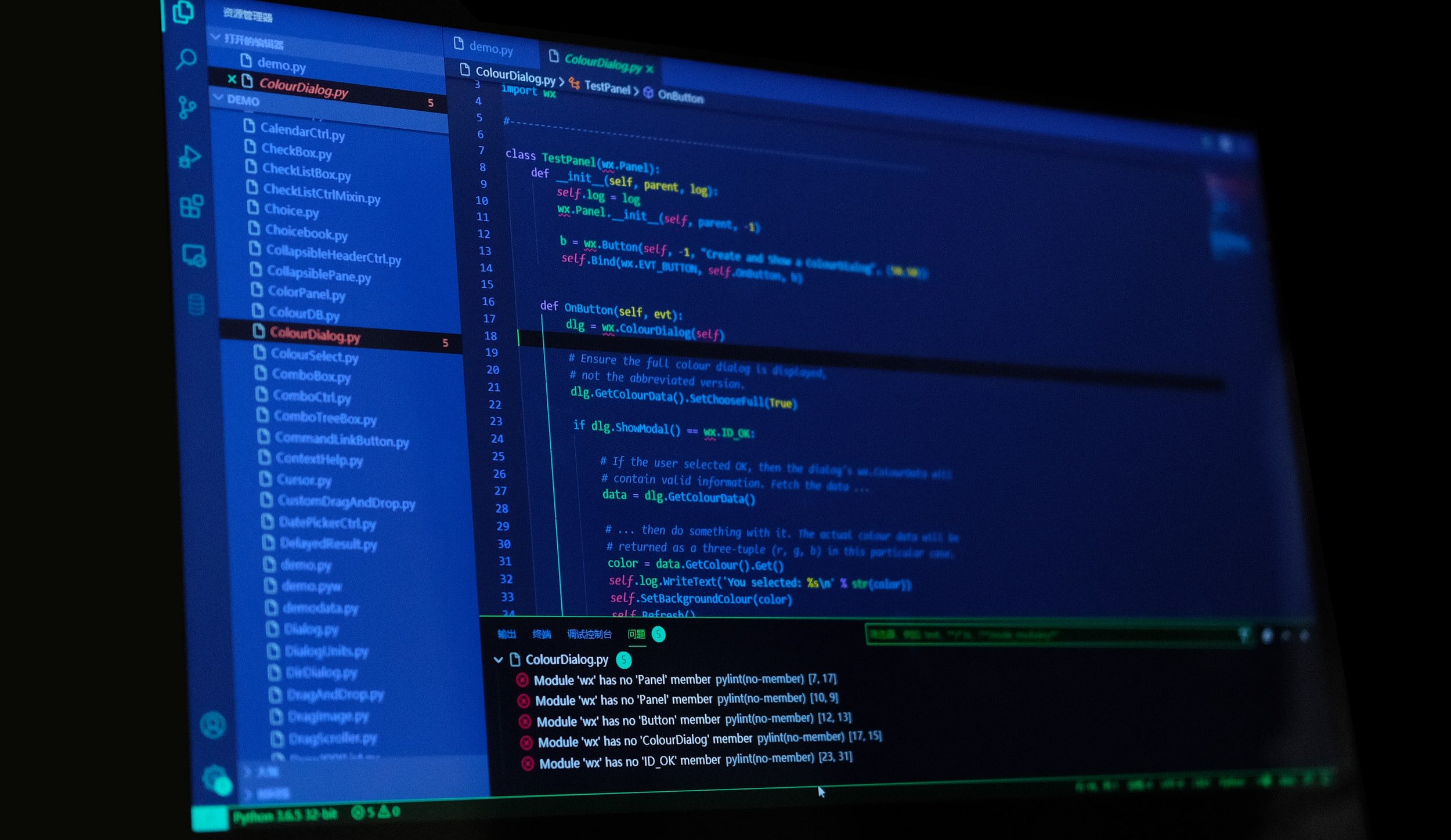
This will help you measure the amount of your product’s code that is monitored by unit tests.  This metric does not measure other types of testing. 

Health Metrics for Agile Teams and Agile Performance Metrics

Agile software development metrics is typically geared toward monitoring software quality and team productivity at each stage. 

Happiness:

Individually we don’t specifically go by a way to monitor happiness in a software development team. The easiest way to do this is just to ask each team member to rate how they are feeling. 


Team Morale:

This allows for a subtle approach for sudden mood swings that may occur within the team. 

Core Lean and Kanban Metrics

Exploring the lean key metrics and kanban methods that are common for both software development and goods manufacturing.


Story Lead and Cycle Time - (SLT):

This helps you track the amount of time passed from when a task is started to when it is finished. The ultimate goal for SLT is to assist teams in checking and reducing the speed of the value chain. Story Cycle Time (SCT) is a part of Story Lead Time, however it only assesses the time of a task. This helps track and reduce the hours spent on it. 

Feature Lead and Cycle Time - (FLT) and (FCT):

Similar to Story lead and cycle time, feature lead time is the same concept, except instead of being for the overall story/task it's for the major features. Feature cycle time is also identical to story cycle time, just for features. 

Story Wait Time - (SWT):

Another component that is linked to Story lead time. This metric helps you manage the resting time of a task. Each team should aim to reduce the SWT as much as possible. 


Story Throughput - (ST):

This is a similar concept to Sprint Velocity in a sense that it helps count the number of stories finished in a sprint. Story throughput works best when it works with smaller stories. 


Created to Finished Ratio:

This means that too many projects are on backlog and not enough have been finished. This metric is helpful because it helps control the number of project bottlenecks, ensuring there’s a balanced number between projects started and projects finished. 


Measuring Software Quality in Agile 

In today’s world everyone expects things to happen instantly, and that’s no exception to the software industry. Using Agile metrics to measure the software quality makes the process just that much quicker. With that being said, despite the fact agile helps quicken the process, it is inseparable from security.

When preparing code for agile metrics, it is crucial to be as comprehensive as possible. There are 2 code analysis systems and one comprehensive approach to help streamline the process of quality assurance. 


Here they are listed: 

Static Code Analysis:

Allows you to check on the source code without having to run the software. It detects bugs, security issues and other shortcomings before they become bigger problems. This allows time for your team to create a product with clean code. 

Dynamic Code Analysis:

This is the opposite to what static code offers, where it lets you evaluate the code when it is running. Static code analysis takes dominance when analyzing code, but dynamic code allows the quality assurance team to detect different problems from static. 

Neither Static Code analysis or dynamic code should be a step that is skipped; they work best as a team. 


Quality Intelligence tools provide a plan for helping teams retrieve information from the whole software development process, and then analyze it and improve how it functions. 

This selection of Agile Software Development metrics will help you create a software that will function for years. If you’re confused on how any of it works, reach out to one of our experts at ISU Corp today!




8 Factors to Consider When Choosing Between NodeJS and Golang

The backend is arguably the most crucial aspect of our applications so it’s important to choose a tool that would make the backend highly efficient and scalable. Fortunately, for the job, there is a large lineup of advanced programming languages to choose from. The process of selecting the right one for your needs can be quite overwhelming especially since the list is rather long and the languages vary in several ways.

Two languages that became popular and are slowly but surely starting to be known as some of the most promising backend technologies are NodeJS and Golang. We’ll be focusing on both languages and comparing them to help you make the right choice for your project.

What Is NodeJS?

Built on Google Chrome’s V8 JavaScript engine, NodeJS is an open-source, server-side runtime environment. Using JavaScript, extensible server-side applications are developed by an event-driven, asynchronous model that NodeJS encompasses. This language has become the most desired environment to build cross-platform applications ever since its introduction in 2009.

Developers can use a single language to write both client-side and server-side scripts since NodeJS is written in JavaScript.

What Is Golang?

Developed in 2007 by Google, Golang, commonly known as Go is an open-source, statically typed programming language that’s used for multiple purposes. It includes a combination of Python speed and C / C++ performance and safety advantages. It’s favoured for its excellent handling of waste collection, memory protection, and dynamic interfaces.

Go works great when it comes to cloud-based interfaces, networking applications, real-time application creation, and microservices.

Go Vs Node

To see what language fits best for your project, take a look at the pros and cons by comparing both Golang and Node JS after you’ve explored the basics of both languages.

Execution Aspect

There are numerous factors affecting a programming language's output and performance. One should carefully choose a programming language that can be used to effectively create a program. 

Here are the variables and factors you should consider when selecting the Go vs Node option:

Element - Maturity

Go can be considered a mature and powerful instrument even though it was launched just over a decade ago back in 2009. Node JS demonstrates the same degree of sophistication and has the support of a wider audience. So, in the Node vs Golang maturity relation, both stand almost identical.

Raw Component

Due to its frustrations with current programming languages in the modern-day world, Google wanted to introduce and implement Golang which is a lightweight platform that’s fast and based on similar characteristics of C and C++. Golang is a better choice for raw output and computing as compared to Node JS.

Node Js, a statically-typed platform is generally slower than other programming languages mainly because it’s a derivative of JavaScript. It is unable to offer the raw performance of CPU or memory-bound operations, unlike Golang. Depending on the design of your app, Node JS may carry out an equally high or a lackluster performance to say the least. When strictly basing it off performance, Go surpasses NodeJS and helps developers achieve better performance.

Real Life Performance

Both languages can give almost the same results when comparing the real-life output of Go vs. Node. JS. For example, Golang and Node JS perform similarly, and at equal speed, when it comes to database connection or network communication.

Handling Errors

The handling of errors in Go allows you to enforce explicit error checking. Compile-time and run-time errors are treated differently, causing developers to encounter issues. The developers of Golang, however, have begun to work on additional features for error handling that can help shorten development time.

Node JS, on the other hand, implements the conventional mechanism of throw-catch error handling that is very common among programmers. In this traditional method, immediately before any further operation is carried out, the errors are shown and corrected.

A lot of web developers find Node JS easier when comparing the Golang vs Node error handling process, as they are very familiar with the throw-catch approach.

The Learning Curve

Go has particular concepts, procedures, regulations and interfaces while it being a relatively new language. To get a decent understanding of it, developers must carry out extensive research especially because there’s minimal amounts of resources to refer to online.

Regarding programming, the most popular language in the world is JavaScript. If developers have elementary knowledge when it comes to using JavaScript, then the transition to using Node JS should be fairly simple. It is also easy for developers to learn Node JS, even if they have limited JavaScript knowledge. There’s tremendous amounts of support, knowledge, and tools from the JS community if an individual needs assistance. 

Multiple Computations At The Same Time

Concurrency is a powerful feature of Go, since it is ideally suited for massive software projects that require the simultaneous handling of thousands of requests. Go uses coroutines (called Goroutines) and a lightweight communication mechanism for threads that enables developers to simultaneously perform their functions. Although users can run their functions using Go at the same time, this is unfortunately not the case for Node JS.

Node JS is single-threaded and uses the method of event-callback, meaning it has to be performed in a linear order and concurrency cannot be achieved. Go is the obvious standout when it comes to this round.

Scalability

When it comes to scalability, Go wins this battle by a large margin because Node JS’s scalability is far less functional and is not recommended due to its weaker parallel method especially for larger projects. In addition, Goroutines are a major asset of Go, helping to efficiently handle parallel threads.

Development Tools

When compared to NodeJS, Go has fewer tools that are available to use, however, it does come with adequate libraries and packages. The fact that Go is such a new language requires developers to do thorough research. It would be ideal for individuals to have some sort of experience in manual configuration.

NodeJS gives you a lot of flexibility to create all kinds of applications with its assortment of tools, frameworks and libraries. Extended support is available from the community for all types of tasks. In summary, NodeJS is the preferred option when it comes to development tools for backend development technologies.

Which Companies Are Using Them?

Enterprises are implementing new innovative technology in their software development process to achieve faster performance and improved quality. Now, after accessing a Node.js vs Go comparison, let us discover which of the languages top businesses have chosen for backend development:

Node.js:

  • Netflix

  • Linkedin

  • Trello

  • PayPal

  • Medium

  • eBay

  • NASA

  • Walmart

Go:

  • BBC

  • Uber

  • Medium

  • Basecamp

  • Intel

  • Google

  • Docker

  • Heroku

Uber moved from NodeJS to Go in 2016, like many others, to achieve better results in software efficiency, and shared its experience afterwards: with Go, the company achieved 99.9 percent uptime.

Which One Do You Choose?

It is difficult to announce one as a winner, as both have their strengths and weaknesses, having made a detailed Node JS vs Golang comparison. Golang certainly wins from the performance perspective since it takes less time, memory, and CPU load to perform operations, while Node. JS excels in accessibility, development tools, and front-end development tool richness. However, the preference will rely solely on the project in question when it comes to NodeJS vs. Golang.  

There’s much to consider when deciding between the two, let us help you with your decision and in implementing the software. Contact us today for more information.  


The Timeline of Web Browsers and Which One is Best for You

For most, the internet is just a place you go to look up information, you don’t normally think about how it became so easy to do research.

The ability to surf the web effortlessly has been around for many years. When the World Wide Web or as we more commonly know it as “www” the prefix to most websites was discovered by Tim Berners-Lee, a scientist situated in London nearly 30 years ago. 

He also created 3 crucial technologies, that are integrated into modern internet today which are:

1. Hypertext Markup Language (HTML)

2. Uniform Resource Identifier (UFI)

3. Hypertext Transfer Protocol (HTTP)


We have seen incredible growth of internet browsers, cloud programs, and web design overall, over the years. It is fascinating to look at the timeline of where it all started.  

Our intentions for web browsers are to continue to make them something we can look back on to see how far they’ve come. While also making it easy to discover what may happen with them in the future. 


Now, What is a Web Browser and How Does it Work?

In short, a web browser is a utility that can be utilized to provide access to websites.  Browsers we know well are:

  • Google Chrome

  • Mozilla Firefox

  • Apple Safari

  • Microsoft Internet Explorer


The web browser’s main job is to deliver HTML code from the web design to the markup web pages. This process all begins when you type a website’s URL into the search bar of the browser.

Next, the browser will load to locate the website’s page information from the server. Once the information is received the browser will notify the server and display it on the web page. As a user you will then be able to read and react to the website. 

Now, here are the browsers throughout the years:

1989 – The World Wide Web by Tim Berners-Lee

  • His plan was to discover a solution for retrieving information from several computers

  • March of 1989 he released a document called “Information Management: A Proposal”, little did he know it would eventually be the internet


1993 – Mosaic is Developed by the University of Illinois

  • Created for use of Supercomputing Applications

  • Mosaic stood out from others in the bunch because it had the features to display text and images consecutively

  • Mosaic was also accessible to both IT tech and normal consumers


1994 – Opera is Developed and the World Wide Web Consortium (WWWC)

  • Opera was created from a portion of a research project at Telenor (a large telecommunication company in Norway back then)

  • It didn’t get released to the public eye until the second edition

  • Surprisingly, Opera is still used today, at Version 62

  • The WWWC was also discovered during 1994 – this allowed for life changing concepts and ideas that were created are continuously utilized today

  • The WWWC was created by Tim Berners-Lee through MIT


1996-1999 – Internet Explorer Version 3 Rises in Popularity

  • Internet Explorer Version 3 – rose to fame, because it had the power to support mixed media applications and e-mail.

  • It was the world’s most used web browser in 1999

2003 – Apple Safari is introduced by Steve Jobs

  • Released with the debut of Mac OS X Panther, and has been a part of every OS X operating system ever since

  • Prior to Safari, provided with Mac Computers was Netscape Navigator and Cyberdog and then eventually Internet Explorer for Mac


2004 – Internet Explorer vs. Firefox

  • Firefox monopolized as a preferred browser in 2004, as consumers started to get frustrated since Internet Explorer didn’t have good security features among other things

  • Firefox is an open-source solution created by Netscape solving hundreds of Internet browser headaches


2008 – the Rise of Google Chrome

  • Started by Google, with program code called “Chromium”

  • The goal of Chromium was to produce a product that is safer and more efficient for consumers to endure the internet

  • In 7 years by 2015, Chrome was declared the most popular web browser with 64.9% of consumers worldwide primarily using Chrome


2015-2016 – Microsoft Edge and Vivaldi

  • Microsoft Edge, the attempt of a comeback for Internet Explorer

  • Originally released with Windows 10 and Xbox One back in 2015

  • Vivaldi – is a multi-platform browser, as an alternative to Opera


The Future of Browsers

  • Google Chrome continues to be the world’s most preferred web browser with a market share of 60.1%

  • Safari is the next best browser with a market share of 12.7%

  • The market share of Internet Explorer and Microsoft Edge is 6.8%


When choosing what web browser will work the best for you, is a difficult decision because there are so many options. Even more, implementing a web browser with proper security features can be enduring and time-consuming.

We’re able to help at ISU Corp. Reach out today!